
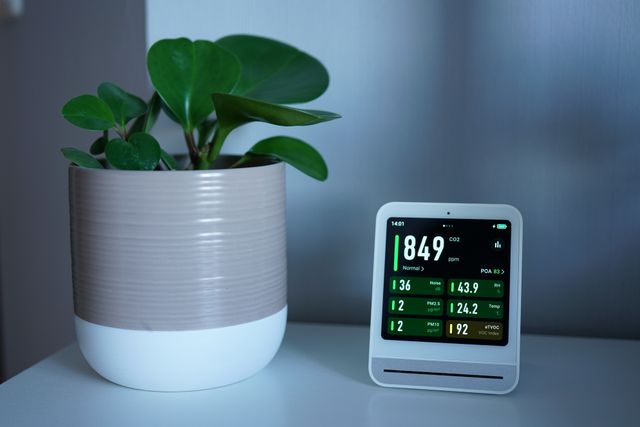
Small device, useful information—or just another gadget on the shelf?
Your home can look clean, smell fresh, and still have air quality issues that are difficult to notice. That is one reason indoor air quality sensors have become increasingly popular with homeowners. But are they actually worth having?
In many homes, the answer is yes—with a few important qualifications.
What Does an Air Quality Sensor Actually Do?
An indoor air quality monitor can track things you cannot see or easily detect. Depending on the model, it may measure particulate matter, carbon dioxide, temperature, humidity, volatile organic compounds (VOCs), or carbon monoxide.
That information can be helpful because indoor air changes throughout the day. Cooking, showering, cleaning products, fireplaces, candles, pets, and even simply having several people in the house can affect indoor conditions.
A sensor may reveal patterns that would otherwise go unnoticed. For example, you might discover that humidity consistently climbs after showers or that particulate levels rise when cooking.
The Biggest Benefit: Knowing When Something Changes
Think of an air quality monitor as an early-warning and awareness tool, rather than a diagnostic device.
If readings repeatedly show elevated humidity, that could encourage a homeowner to improve bathroom ventilation or investigate a possible moisture source. High particulate readings might prompt a closer look at filtration, ventilation, or activities such as burning candles.
The real value is often in identifying trends over time, not reacting to one unusual reading.
But There Is a Catch
Not every sensor measures everything, and consumer-grade monitors vary considerably in accuracy.
A sensor can also give a false sense of security if it shows reassuring numbers while a separate hazard is present. For instance, a basic air quality monitor may not detect carbon monoxide at all.
That is why an air quality sensor should supplement—not replace—proper safety equipment and professional evaluation.
Every home should have properly installed, functioning smoke alarms and carbon monoxide alarms. And when there is a concern about moisture, mold, combustion gases, or another indoor environmental issue, the appropriate inspection or testing method matters.
So, Is One Worth Buying?
For many homeowners, an air quality sensor is a relatively inexpensive way to become more aware of what is happening inside the house.
Look for a reputable monitor that clearly explains what it measures, how it works, and its limitations. Placement also matters. Avoid putting the sensor directly beside a window, stove, air vent, or bathroom door, where readings may be unusually influenced by a nearby source.
The Bottom Line
An air quality sensor will not tell you whether a home is “good” or “bad” with a single number. What it can do is provide useful information and help identify patterns worth paying attention to.
In other words, it is a helpful set of eyes on the indoor environment—not a substitute for common sense, proper ventilation, safety alarms, or a professional inspection when one is warranted.